Peter Pan in 2026: The Dark Side of Never Growing Up
Peter Pan was never just a story about a boy who refused to grow up. In an age of algorithms, endless entertainment and digital escapism, Neverland feels less like a fantasy—and more like a mirror.

For generations, Peter Pan has symbolised eternal childhood, freedom and adventure. He is the boy who invites us to a world where growing up is optional, responsibilities can be postponed indefinitely and every day promises another adventure.
But the closer you look at the story behind Neverland and its eternal boy, the more unsettling it becomes. Beneath the fantasy lies a psychological and cultural pattern that feels surprisingly familiar in 2026. What first appears to be a celebration of freedom gradually reveals itself as something closer to a warning about stagnation.
Freedom or Stagnation?
On the surface, Peter Pan is simply a boy who refuses to grow up. He flies, plays games and battles Captain Hook, the pirate every child is supposed to fear. Yet the world of Neverland is built on something far more disturbing than endless adventure.
Peter doesn't merely escape time—he rejects it. He refuses not only to grow older, but also everything that adulthood represents: responsibility, change and consequence.
The Lost Boys disappear once they become too old. Wendy Darling and her brothers are drawn into Peter's world, not as equals but as functions within his carefully preserved fantasy. Wendy becomes the caregiver and storyteller; her brothers become soldiers in Neverland's endless war against the pirates.
Seen from this perspective, eternal childhood is not freedom at all. It is stagnation.
Peter Pan begins to look less like a heroic figure and more like the embodiment of a deeply human fear: the fear of growing older, accepting responsibility and acknowledging that time always moves forward.
Although Peter Pan Syndrome is not an official psychological diagnosis, the term has become a useful way of describing adults who struggle to embrace the responsibilities that come with maturity. Instead, they drift from one pursuit to the next, avoid long-term commitments and continually seek immediate gratification over lasting fulfilment.
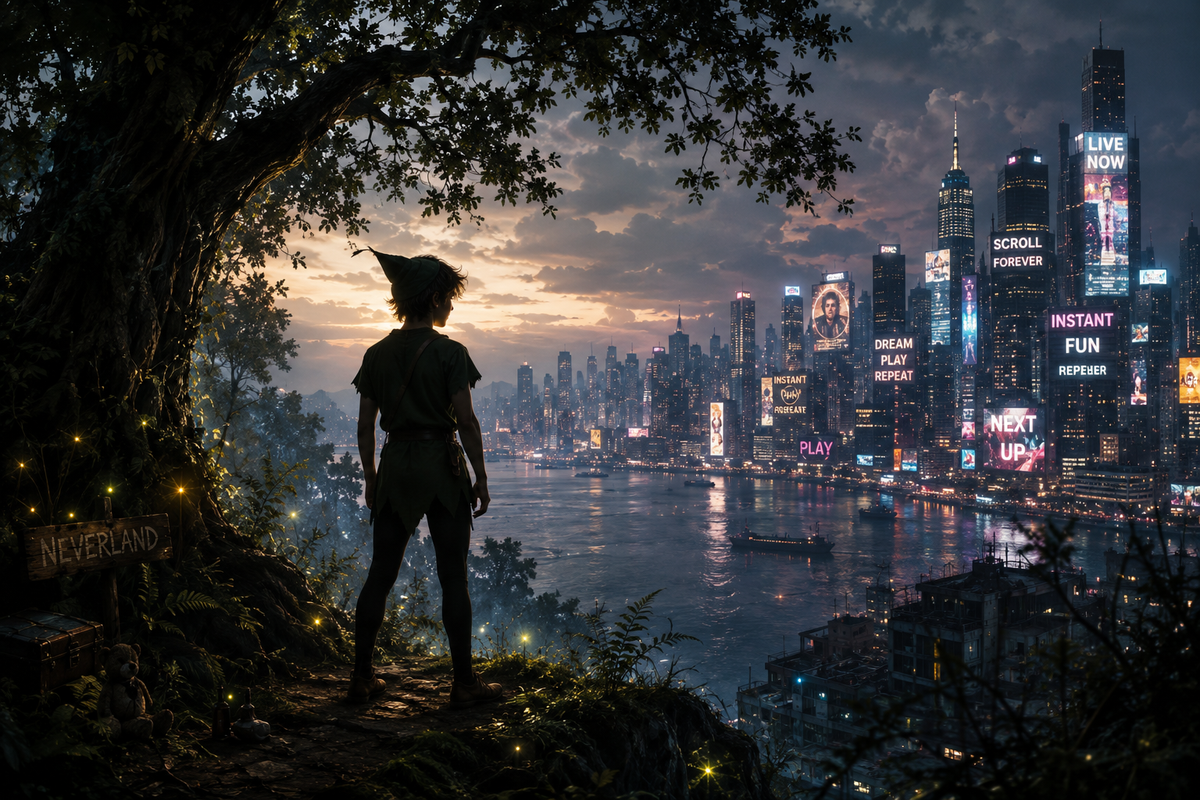
Modern life often reinforces the same tendencies. Digital entertainment, endless streams of short-form content and the constant pursuit of dopamine have created something that increasingly resembles a collective Neverland. Platforms such as TikTok, livestreaming and algorithm-driven social media make it remarkably easy to live in a world where consequences feel distant, everything is temporary and every mistake can be buried beneath the next piece of content.
Peter's refusal to grow up finds an unexpected parallel in a culture that often rewards novelty over stability, distraction over reflection, and the illusion of living entirely in the present while postponing the responsibilities that eventually arrive for everyone.
Neverland Goes Digital
Captain Hook represents everything Peter Pan refuses to acknowledge: time, order and mortality. His endless conflict with Peter, together with Tick-Tock the Crocodile—whose relentless ticking reminds Hook that time is always running out—is about far more than pirates and adventure. It is a struggle between two opposing realities: one accepts that life moves forward, while the other desperately tries to pretend that it does not.
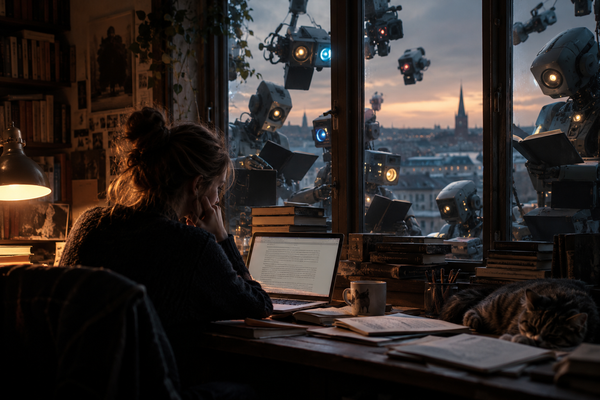
The same tension can be seen in contemporary culture. Faced with anxiety, uncertainty and the awareness that time never stands still, many of us retreat into forms of escapism that offer immediate relief. Endless entertainment, social media, livestreams and digital distractions can become ways of postponing uncomfortable thoughts rather than confronting them.
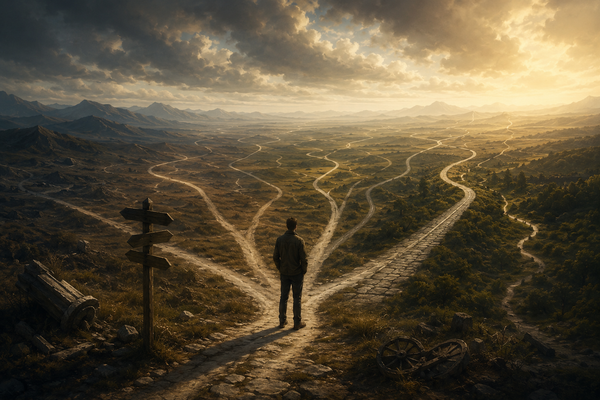
In this reading, Wendy Darling becomes the story's quiet counterbalance. She is more than Peter's companion; she represents reflection, responsibility and the ability to choose a different path. Unlike Peter, Wendy eventually recognises that Neverland cannot be a permanent home. She understands that growing up may be frightening, but remaining forever in childhood comes at an even greater cost.
Perhaps that is Wendy's most important role. Even in a culture that rewards constant stimulation and endless distraction, there remains a small voice reminding us that there is another life waiting beyond the fantasy.
A voice that quietly asks:
"Maybe it's time to go home."
A Fairy Tale Disguised as a Warning
Neverland has never really disappeared. It has simply changed form.
Today, it exists in endless scrolling, algorithm-driven entertainment, virtual worlds and digital platforms that invite us to remain permanently distracted. Like Peter Pan, we are rewarded for being entertaining, spontaneous and endlessly available, but not necessarily for growing, reflecting or accepting the responsibilities that come with adulthood.
The figures who resemble Captain Hook in our own lives—the reminders of time, ageing and mortality—are easy to ignore. There is always another notification, another video, another livestream, another distraction waiting to pull our attention elsewhere.
Peter Pan in 2026 is no longer just a boy in a green hat.
He is the algorithm.
The pursuit of dopamine.
The promise that we can postpone responsibility for just one more day.
Hook represents the body, the clock and the simple truth that time continues to move forward whether we acknowledge it or not.
Wendy is something quieter. She is the voice of reflection—the part of us that reminds us there is a world beyond Neverland, and that choosing to return is not a defeat but a necessary part of becoming fully human.
Perhaps that is why Peter Pan continues to resonate more than a century after J. M. Barrie first imagined him. It was never merely a children's adventure. It was a story about the temptation to escape reality, disguised as a fairy tale.
Freedom without growth eventually becomes stagnation.
Escapism without reflection eventually costs us both our time and ourselves.
And no matter how long we remain in Neverland...
...the clock never stops ticking.