Refugee or Emigrant?
What separates an emigrant from a refugee? Once, the answer seemed obvious. Today, the distinction is becoming increasingly blurred as climate change, economic inequality and political instability reshape why—and how—people move.

Do ordinary emigrants still exist, or has everyone become a refugee in one way or another?
There was a time when the distinction seemed straightforward. An emigrant left because they wanted to. A refugee left because they had no choice.
Today, that distinction feels increasingly like a nostalgic linguistic construction—a relic from an era when borders appeared clearer and human motivations could still be filed neatly into separate categories.
What, after all, is an emigrant today?
Is it the person who leaves their country with a polished LinkedIn profile, a scholarship and the promise of better career opportunities? Or is it simply a refugee with a more successful public relations department?
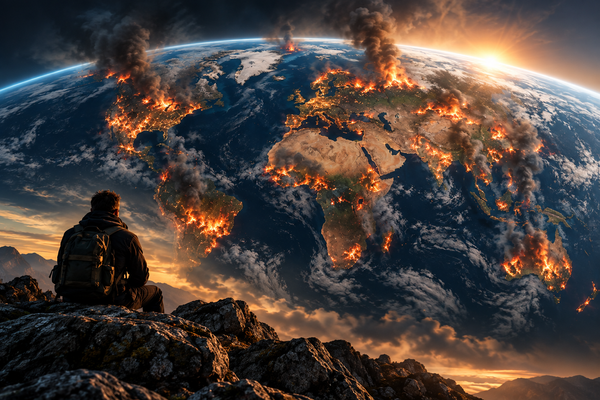
And what about the refugee? In a world where climate change, economic inequality, political instability and digital surveillance merge into a single global pressure system, the line becomes harder to draw. When the "choice" to stay increasingly means remaining within an ever-narrowing corridor of opportunity, voluntary migration begins to look less like a genuine choice and more like a privilege.
When Language Falls Behind
The interesting part is not that the world has changed. It always has.
The interesting part is that our language often behaves as though it hasn't.
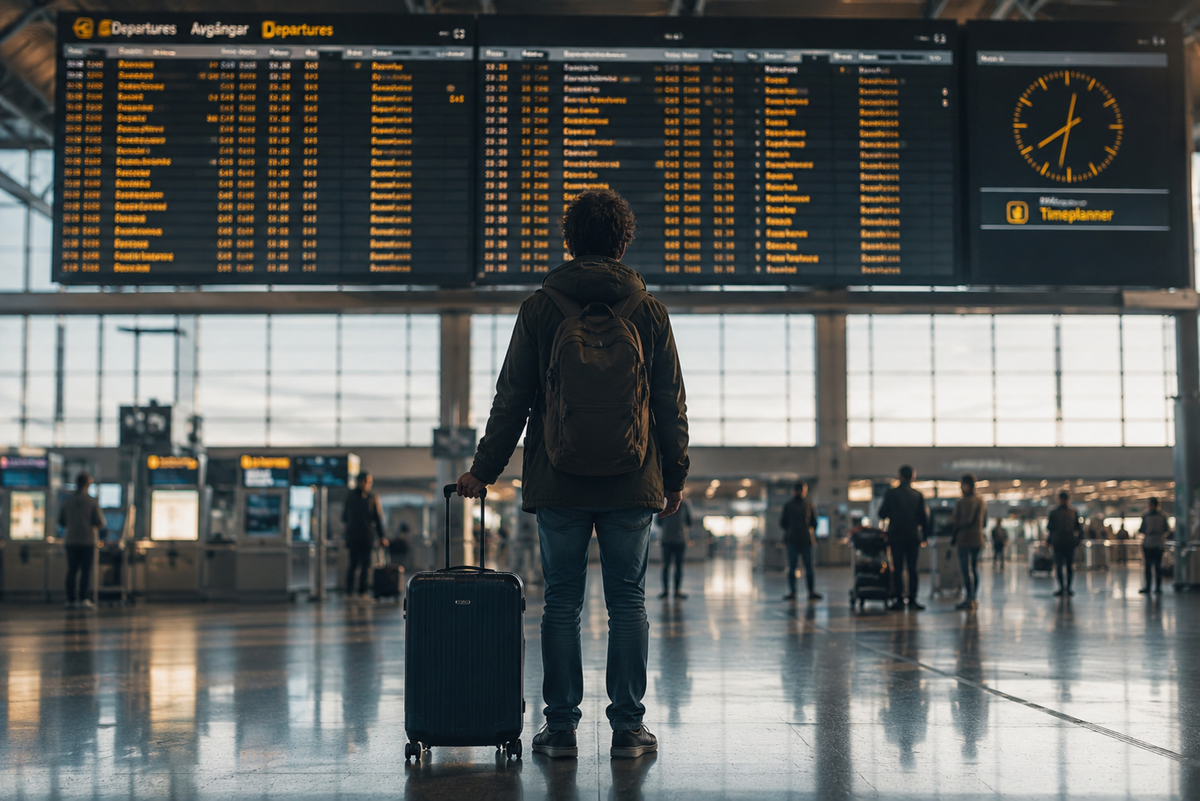
We still like to imagine the emigrant as the organised version of human movement: the person who plans ahead, packs a suitcase weeks in advance and says things like, "We'll try it for a couple of years and see how it goes."
The refugee, meanwhile, enters the story as an interruption. A disruption. An unexpected movement that disturbs our otherwise tidy map of the world.
Reality, however, has stopped respecting that distinction.
In today's interconnected world, migration is rarely entirely voluntary or entirely forced. More often, it occupies the vast grey area in between, where economics, climate, education, family and simple desperation overlap like layers in a badly constructed lasagne.
A young software developer leaves Southern Europe because there are no jobs at home.
A family abandons a coastal community because the sea keeps creeping further inland.
A student never returns after graduation because, over time, "home" becomes an idea rather than a practical destination.
Which of them is an emigrant?
Which is a refugee?
And which is simply someone who moved?
Perhaps this is why we continue to cling to the distinction.
It makes responsibility easier to distribute.
The emigrant fits comfortably into our idea of a global marketplace built on choice.
The refugee fits comfortably into our idea of a moral obligation.
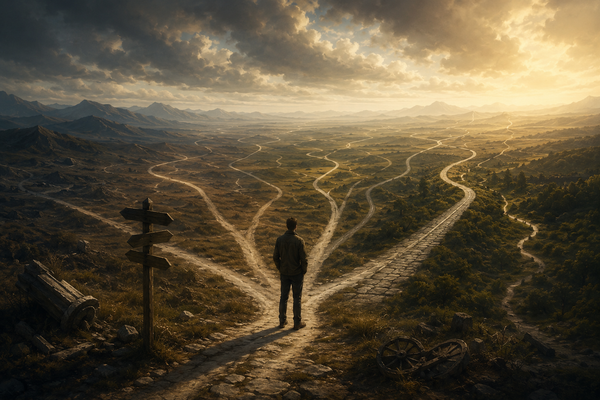
But if nearly every movement is shaped, at least in part, by pressure, inequality and structures we rarely notice, what happens to our categories?
They begin to resemble what they may always have been:
administrative tools rather than human truths.
A World Permanently in Transit
Perhaps we should stop asking what people are and start asking why they move in the first place.
In a world where stability has itself become temporary, all of us exist in some form of movement. Some travel with visas and return tickets. Others leave without guarantees of any kind.
Perhaps that is where the modern emigrant and the modern refugee finally meet—not in the reason for the journey, but in the shared feeling that the place they left behind could no longer hold them.
Language changes slowly.
Reality does not.
While we continue debating definitions, the world has already packed another suitcase and moved on.
Perhaps that is the most honest thing we can say about our time:
We are still trying to name a movement that no longer stands still long enough to be defined.