Sister Rain's Unstoppable Rock Revival
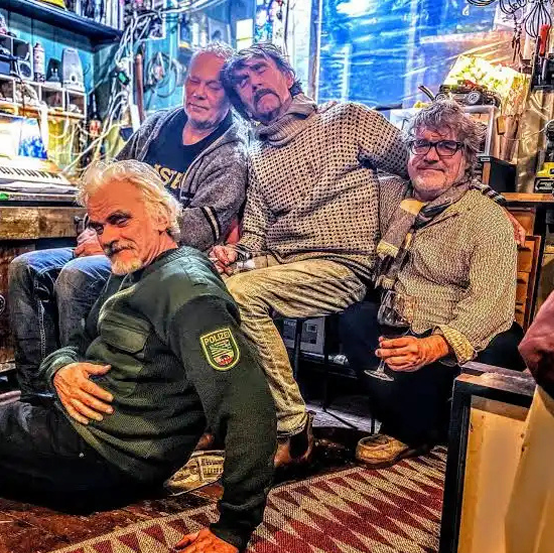
After decades away from the spotlight, Norwegian cult rock band Sister Rain is back with an ambitious triple album. We spent a day with frontman Aslak Nygren to talk about music, friendship, craftsmanship, and why some bands never really disappear.

An extended interview from RABAGAS Magazine
Wandering through the Old Town of Fredrikstad, with its charming cobblestone streets and centuries-old architecture, always feels like stepping into a time machine. I've been here several times before, but today is different.
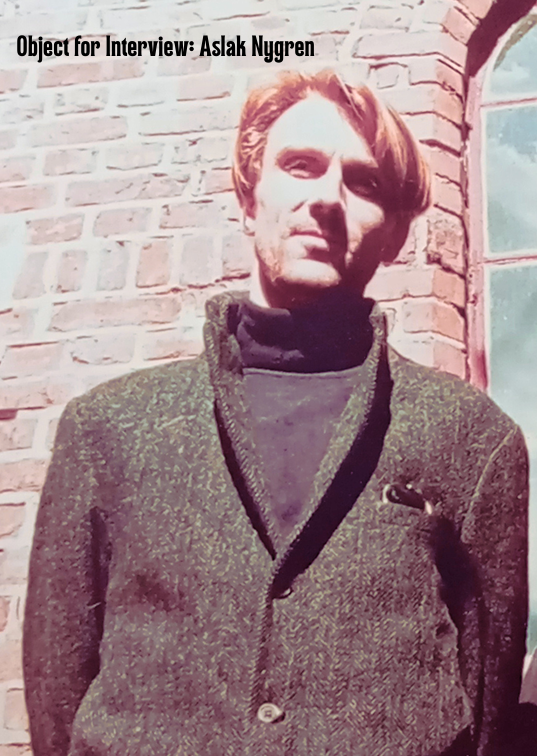
Today I'm on assignment for RABAGAS Magazine to meet Aslak Nygren, the lead vocalist of the legendary Norwegian rock band Sister Rain.
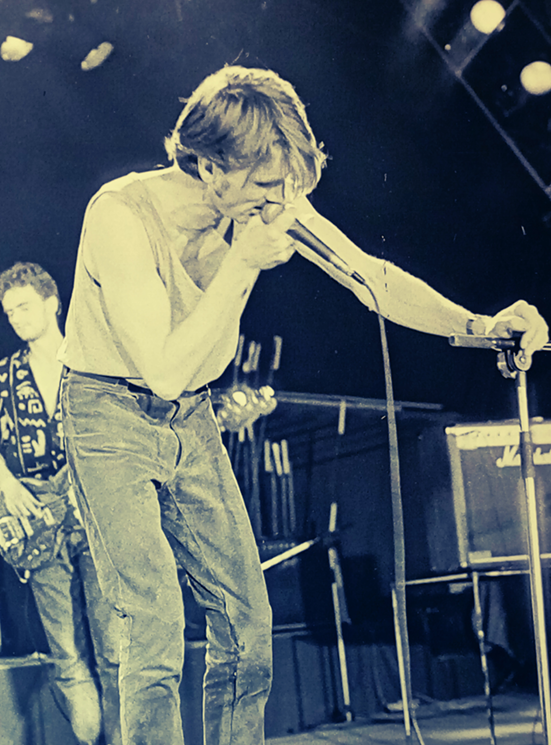
Nygren is known for his distinctive voice, often compared to artists such as Lou Reed and Neil Diamond. Beyond Sister Rain, he has also been involved in several other musical projects. He co-founded The Merchants of Venus together with Charles Normal and Rune Annaniassen, a collaboration that eventually led to work with members of Guns N' Roses and resulted in the critically acclaimed album Wish Across the Land, later nominated for the Norwegian Spellemann Award.
Over the years, Nygren has also played in bands such as Dekadanse and Skogvokterne, demonstrating a musical range that stretches far beyond Sister Rain.
Then I see him.
The sun is behind him as he walks toward me, arriving just three minutes later than agreed.
The Man Behind the Voice
I'm curious about the man behind one of Norway's most distinctive rock voices.
While we wait for the ferry, Aslak lights a slightly bent, hand-rolled cigarette and quietly watches the river. It seems like the perfect moment to begin.
He confirms that he has a partner these days, but at this point in life he prefers to keep his private life private.
Born on October 23, 1962, Aslak has spent virtually his entire life in either Oslo or Fredrikstad.
Although music has always been central to his life, he and the rest of Sister Rain have maintained ordinary jobs alongside the band. Besides co-founding the legendary venues MIR and Månefisken in Oslo, he has worked at the Norwegian Museum of Cultural History on Bygdøy.
Away from music, his interests revolve around wooden boats, sailing, craftsmanship, construction work and spending time outdoors.
Modern television doesn't impress him very much. Neither does most new technology, although he admits having a weakness for smartwatches.
Travelling isn't high on his list either, despite once sailing through rough northern waters all the way toward Russia.
Contrary to what many might expect from a rock musician, he now prefers spending as much time at home as possible, restoring an old house where he hopes to spend the rest of his life.
Some evenings are reserved for something much simpler.
He takes his guitar out to the tipi in his garden and plays.
The Formation of Sister Rain
Can you take us back to the beginning?
What inspired the formation of Sister Rain, and how did you all meet?
Aslak smiles.
"It was a long time ago."
Still, the memories come surprisingly quickly.
Originally he played together with Eystein, who invited him to sing in a project called EX-LEX. That was how the two first met. Ivar was there from the very beginning as well.
Ulf joined the band later, around the time of their second album.
He laughs as he remembers those days.
Ulf was a couple of years older than the rest of them, and when he first walked into the rehearsal room, they all looked up to him.
By then, Sister Rain had already begun building its own identity.
The band officially formed in January 1988 and, remarkably, secured a recording contract with Voices of Wonder Records after only a single live performance. They had been together for barely three months.
Inspired by American underground rock and late-1960s psychedelia, Sister Rain released four albums between 1988 and 1993, while also appearing on several compilation records.
The ferry arrives.
Like all ferries in Fredrikstad, it's bright red, electric and completely free.
We board and make our way to the rear corner, where I immediately claim the window seat.
Aslak remains standing in the middle of the ferry, gently swaying with every movement of the river.
He almost looks like a rebellious teenager.
I use the opportunity to ask another question.
Who were your biggest musical influences in those early years?
His answer jumps effortlessly between genres and generations.
Cornelis Vreeswijk.
Johnny Cash.
The Cure.
And a number of Norwegian underground bands that never became particularly famous, including Kunstrøsk, Holy Toy and Depress.
By the time we reach the opposite shore, we're the only passengers getting off.
Most people continue into Fredrikstad's city centre.
They have no idea that the man walking beside me belongs to a band that, in its own quiet way, helped shape Norwegian rock history.
And now we're heading toward the place where it all continues.
Musical Influences and Songwriting
Aslak tells me we've now arrived on Kråkerøy, the island that has protected Fredrikstad from the sea at the mouth of Norway's longest river, the Glomma.
For the past several years, Sister Rain's rehearsal space has been located here, inside the home of guitarist Ulf Knudsen, the last member to join the band.
Although Sister Rain has been largely silent for more than a decade, they've never really stopped making music.
They're now putting the finishing touches on what can only be described as an ambitious project: a triple album collecting the strongest unreleased material they've created throughout their entire career.
The band hasn't toured since the early 2000s.
But the songs never stopped arriving.
As we walk the few hundred metres from the ferry to the rehearsal space, I ask about the songwriting process.
How does a Sister Rain song come to life?
"At the beginning I wrote everything," Aslak says.
"But after a while everyone started finding their own voice."
Over time each member began contributing songs.
Today, songwriting is shared naturally between the four musicians.
Everyone brings something different to the table.
Perhaps that's one of the reasons the band has remained creatively alive for so many years.
Former members have also left lasting fingerprints on Sister Rain's sound.
Among them are guitarist Mads Due-Tønnesen, drummers Nils K. Hagen, Steinar Buholm, Martin Langli, Kenneth Kapstad, Knut Rasmussen, and Alexander Lindbeck, together with pianist Torben Grue and guitarist Terje Nicolaisen.
Aslak laughs and hopes he hasn't forgotten anyone.
Considering the sheer number of songs the band has written, even they occasionally rediscover material they'd almost forgotten existed.
Lyrics and Inspiration
What themes do you keep returning to when you write lyrics?
Aslak barely pauses before answering.
"The general misery of life."
He smiles.
"It's often written as a kind of stream of consciousness."
He credits Bob Dylan for introducing him to that approach.
"The words don't always have to make literal sense. For me it's more about creating images... little tableaux."
The answer somehow feels exactly like Sister Rain's music.
Suggestive rather than explanatory.
Dreamlike rather than literal.
Before I know it, we've arrived outside Ulf's house.
Inside the gate I spot two grown men waving.
For a brief second I realise I'm about to walk into one of Norway's cult bands' creative headquarters.
I wave back.
Inside the Studio
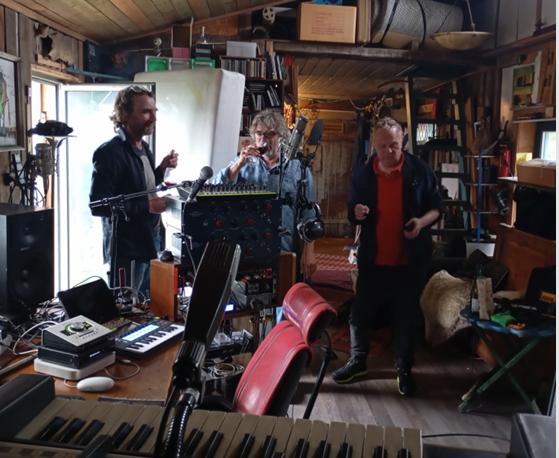
This Sunday only three members are present.
Aslak.
Eystein.
Ulf.
Bassist Ivar has remained in Oslo because of other commitments.
Ulf has built the studio himself inside an old outbuilding on the property.
It immediately feels like one of those wonderfully chaotic creative spaces where every cable, amplifier and coffee cup seems to have earned its place over decades.
Someone quickly points out the homemade urinal around the back.
A glass of red wine appears in my hand before I've even had time to decline.
Hospitality seems to be taken seriously here.
The atmosphere is relaxed.
But focused.
The band works their way through song after song, discussing tiny adjustments to mixes and arrangements.
Sometimes an entire discussion is settled by a single glance.
Sometimes by Aslak suddenly shouting:
"Yes! That's it!"
before lighting another cigarette in the doorway.
I find myself watching the room more than participating.
There's something fascinating about seeing musicians who've known one another for almost forty years communicating without needing many words.
It quickly becomes obvious that Eystein Hopland has played a central role in shaping the arrangements for the upcoming albums.
His fingers move effortlessly across the keyboard while he and Ulf discuss frequencies, balance and small details in the mix.
Aslak rarely interferes.
Instead he walks slow circles around the room, listening.
Whenever something changes—even something tiny—his ears immediately pick it up.
The others seem to wait for his reaction.
Then comes a quiet laugh.
Or a small nod.
That's enough.
Everyone knows they're moving in the right direction.
I suddenly realise something.
It would actually have been interesting to see where Ivar usually sits in this room.
His absence somehow creates an empty chair that's impossible not to notice.
Yet despite one missing member, the chemistry between the others is unmistakable.
It doesn't feel like three musicians working.
It feels like old friends continuing a conversation they've been having for almost forty years.
Reflecting on the Journey
The friendship between the band members is impossible to miss.
Between listening sessions they catch each other up on the ordinary details of life.
Ulf talks about spending most of the summer maintaining his house. There are simply too many building projects to think much about holidays, although he might squeeze in a short trip to Sweden.
Aslak talks enthusiastically about his tomato plants.
Less enthusiastically about the flies that have already cost him a small fortune in insect repellent.
Eystein lights up when he starts describing the equipment he brought with him on the train from Oslo.
He proudly points to a small square device.
"A computer," he calls it.
It's barely larger than my lunchbox—the one I realize I've absent-mindedly left in the car.
Inside that little box lives the entire upcoming triple album.
Despite having played together since the late 1980s, there's still something wonderfully youthful about the way they interact.
They're no longer young men.
But they still behave like a group of friends who have discovered something exciting in a garage.
These days they meet roughly once a month.
Not for rehearsals in the traditional sense.
Mostly for listening sessions like today's.
Fine-tuning.
Tweaking.
Listening again.
The songs themselves have already been written.
Now they're sculpting the final details.
A Triple Album After All These Years
I ask the obvious question.
Could the album finally be released this autumn?
All three smile.
They certainly hope so.
For longtime fans, the release has almost taken on mythical status.
A journalist from Aftenposten once dismissed Sister Rain as "the dope band."
The nickname stuck.
Not because it was accurate.
But because it reflected the stereotypes surrounding alternative rock bands in Norway during the late 1980s.
It was a very different country back then.
Norway was slowly opening itself to new cultural influences.
Bands like Depeche Mode, The Cure and U2 had begun reshaping popular music.
New sounds arrived from abroad.
Young musicians started experimenting.
The country itself was changing—industrially, culturally and socially.
Everything seemed to be moving forward at once.
There was no internet.
No smartphones.
No streaming services.
Just records.
Concerts.
Word of mouth.
And endless hours spent in rehearsal rooms.
"It's About Feelings"
As the conversation returns to songwriting, I ask what has kept Sister Rain together for so long.
Ulf answers before anyone else has the chance.
"It's not about rules."
"It's about feelings."
The sentence hangs in the room for a moment.
Simple.
Almost obvious.
Yet it probably explains the band better than any biography ever could.
When one member suggests changing something, the others genuinely listen.
No ego.
No unnecessary arguments.
Only a shared desire to make the songs better.
Perhaps that's rarer than talent itself.
Watching them work, it becomes increasingly clear that everyone has found their own role.
Eystein constantly explores new possibilities, reshaping arrangements until they reveal something unexpected.
Ulf listens carefully, offering technical precision and quiet confidence.
Aslak rarely speaks while they're working.
Instead he listens.
Patiently.
When he finally reacts—a nod, a grin, a brief laugh—the others immediately know they've found what they were looking for.
Ivar isn't here today.
He works at Rikshospitalet in Oslo and couldn't make the session.
But judging by the way the others speak about him, his dedication to the band is every bit as strong.
Sitting inside Ulf's studio, listening to these carefully crafted recordings, one thing becomes impossible to ignore.
The music sounds remarkably alive.
It's energetic.
Playful.
Confident.
The arrangements move effortlessly between rock, punk and psychedelia without ever sounding nostalgic.
This isn't a band trying to recreate its youth.
It's a band that never really stopped evolving.
Every song reveals another layer.
Another surprise.
Another reminder that experience sometimes matters more than speed.
Long ago these musicians passed the famous ten-thousand-hour mark.
They know exactly what they're doing.
And more importantly—
they still seem to enjoy doing it.
Rock 'n' Roll Until the Very End
Toward the end of the afternoon our conversation drifts away from music.
It becomes more philosophical.
Almost reflective.
Aslak shakes his head as he looks out the studio window.
"I don't understand why I still bother giving so much of myself," he says.
"People have gone completely mad."
The sentence hangs in the air.
Not angry.
Just tired.
Given Sister Rain's roots in psychedelic rock, I ask the question many people probably assume they already know the answer to.
Have psychedelics ever played a role in the band's music?
Aslak laughs.
"No."
"I've never tried anything psychedelic."
He pauses.
"As far as I know, cannabis isn't psychedelic either."
Then his expression turns more serious.
"But people don't seem to believe scientists anymore."
"The experts we spent years educating."
He shrugs.
Whatever youthful excess may once have surrounded the band, those days are long behind them.
Today the members of Sister Rain seem remarkably grounded.
Family men.
Craftsmen.
Musicians.
Friends.
The myths may still exist.
But they've long since filed them away under the old saying:
"All publicity is good publicity."
Time to Leave
Eventually it's time to head back.
We say our goodbyes outside the studio.
Aslak heads toward the ferry.
I walk along the river toward the city centre.
The songs I've heard throughout the afternoon continue looping inside my head.
If today's preview is anything to judge by, Sister Rain are about to release something genuinely special.
Not because it's fashionable.
Not because nostalgia sells.
But because the music is simply that good.
Radio stations should be paying attention.
It's been many years since I heard an album that feels this carefully composed while still sounding completely alive.
If I were handing out ratings, this would be an easy one.
Dice Roll: 6
One Final Surprise
Halfway back I glance over my shoulder.
Something doesn't look right.
Or perhaps it looks exactly right.
Aslak hasn't boarded the ferry after all.
Instead, he's climbed into a tiny inflatable boat.
It's barely six feet long.
White.
Slightly deflated on one side.
Hardly the sort of vessel you'd choose for crossing a river with a noticeable current.
Naturally, he remains standing.
One hand holds onto his cowboy hat as the wind catches it.
The other keeps him balanced while the little boat drifts downstream.
Then he looks back toward the quay.
A grin spreads across his face.
"Rock 'n' roll!"
he shouts.
People waiting for the ferry turn around.
The ferry captain answers with a long blast of the horn.
It would probably have delayed the ferry by no more than twenty seconds to steer around him.
Instead, everyone gets an unexpected performance.
A perfect final image.
Aslak Nygren drifting down the river in an almost-flat rubber boat, laughing at the world.
Wild.
Fearless.
Entirely himself.
As he disappears beneath the footbridge and strangers wave back at him from the riverbank, Sister Rain's music still echoes in my mind.
Some bands fade away.
Others simply take a very long pause before reminding everyone why they mattered in the first place.
Sister Rain belongs firmly in the second category.