When the Pacific Sneezes
It begins with a broken coffee machine and ends in the middle of the Pacific Ocean. An essay about El Niño, the hidden systems that shape our world, and why a warmer ocean can eventually be felt in places that seem impossibly far away.

A Strange Name for a Very Big Problem
By Jonas Steinarsen
It began, as so many things do, with coffee.
Or rather, the lack of it.
The coffee machine in the office had once again decided to undergo what could only be described as an existential crisis. It clicked rhythmically, released small clouds of steam and produced a sound that resembled an angry seabird trapped somewhere inside the ventilation system.
Hampus thought it should be thrown away.
Ragna argued that it ought to stay exactly where it was until it finally exploded.
Dag maintained that it could probably still be repaired.
I mostly stood there waiting for coffee.
While the machine slowly worked its way through what looked remarkably like the five stages of grief, I began scrolling through the morning news on my phone. That's when I came across a word I hadn't really thought about for years.
El Niño.
A weather phenomenon that may shape large parts of the world throughout 2026 and 2027.
I have to admit that it didn't immediately capture my attention. To most Norwegians, El Niño sounds more like the name of a footballer—or perhaps a restaurant with a logo that contains slightly too many colours—than something capable of influencing life across the globe.
But the more I read, the more I began to understand why scientists follow the phenomenon with almost religious devotion.
Because El Niño isn't just weather.
It isn't just climate.
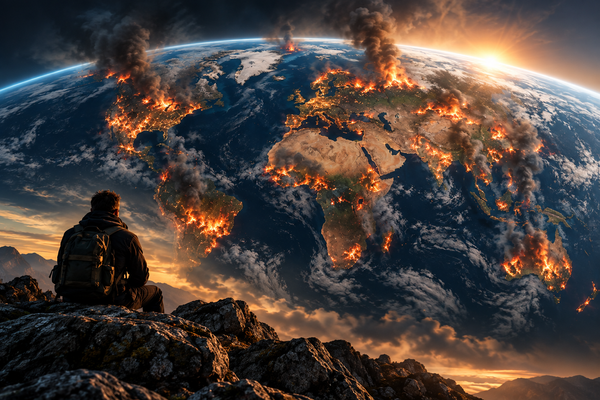
It is one of the largest natural systems affecting life on Earth.
And it all begins with water.
An extraordinary amount of water.
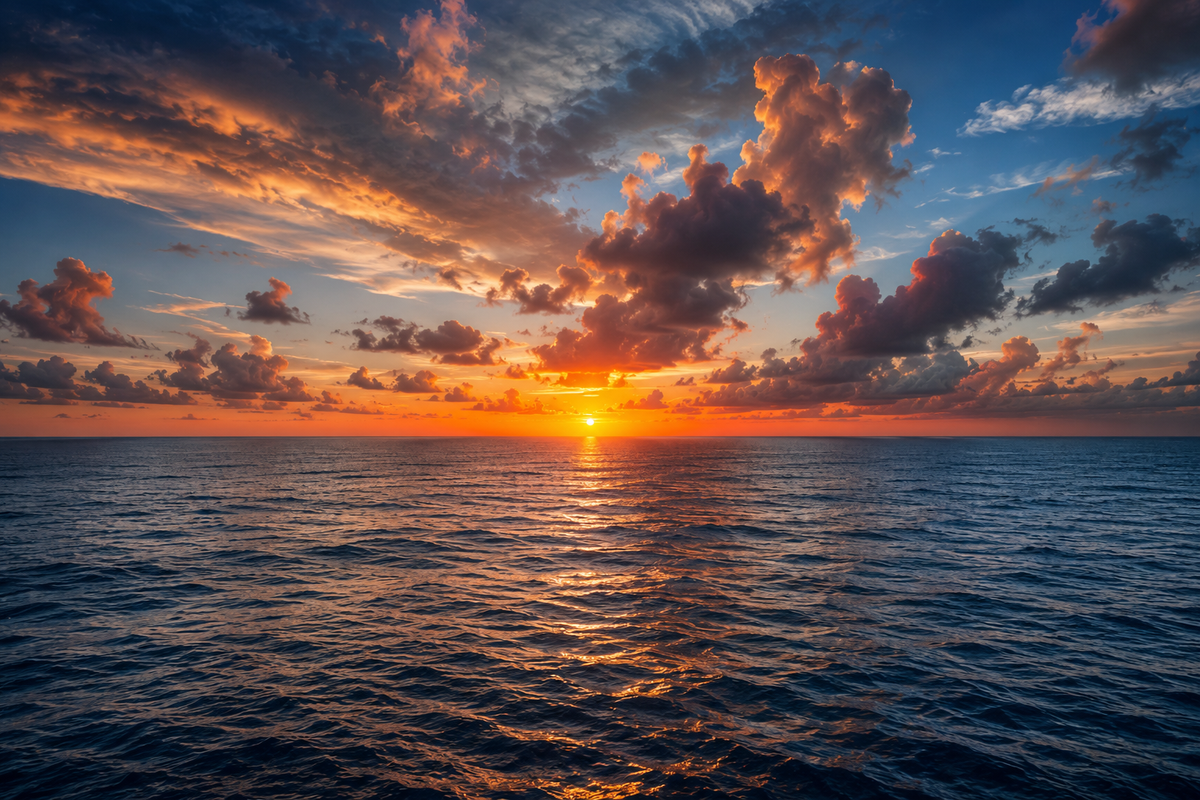
The tropical Pacific is the largest ocean on the planet, so vast that it's almost impossible to grasp its scale without looking at a map.
We tend to think of the ocean as scenery—something quietly occupying the background while human beings get on with the business of living.
But the ocean isn't the background.
It's the engine.
It stores heat.
Moves energy.
Shapes the winds.
Guides the rain.
And influences far more of our daily lives than most of us like to admit.
Under normal conditions, the trade winds blow westward across the Pacific, pushing warm surface water towards Indonesia and Australia while colder, nutrient-rich water rises along the coast of Peru.
This system existed long before people built cities, wrote newspapers or argued over parking spaces.
It is part of the Earth's original machinery.
Then, every so often, something changes.
The trade winds weaken.
The warm water begins drifting back towards the east.
Temperatures rise across enormous stretches of ocean.
The atmosphere responds.
And suddenly, the world is no longer quite the same.
This is El Niño.
The name comes from Peruvian fishermen who first noticed the phenomenon centuries ago. It often appeared around Christmas, so they called it El Niño—"the Christ Child"—in reference to the infant Jesus.
I've always liked that detail.
Not because it's scientifically important, but because it reminds us that people have always tried to understand the world using whatever tools they happened to have.
Before satellites.
Before computer models.
Before meteorological institutes.
There were fishermen.
People who went out to sea every day and noticed when something was different.
When the fish disappeared.
When the water became warmer.
When the weather began behaving strangely.
Their observations were the first clues that something enormous was happening far out in the Pacific.
Today, scientists follow the phenomenon using satellites, drifting buoys, ocean models and computers capable of performing calculations that would take a human lifetime to complete.
Yet they are still trying to answer the very same question those fishermen asked hundreds of years ago:
What is the ocean trying to tell us?
And right now...
...it seems the ocean has something to say.
The Machine Nobody Owns
It's easy to think of weather as something local.
You look out the window.
It's raining.
It's snowing.
The wind has picked up.
You mutter something about the umbrella and carry on with your day.
In reality, weather isn't local at all.
It's global.
What happens over an ocean on one side of the planet can influence people who have never even heard of the place where the change began.
This is where El Niño becomes truly fascinating.
Because this isn't simply about a few extra degrees in the Pacific.
It's about the way the Earth's entire atmosphere responds when one of the planet's largest engines changes speed.
Imagine an enormous system of interlocking gears.
Not the elegant mechanism inside a Swiss watch, but a vast machine built from ocean currents, winds, clouds, temperatures and atmospheric pressure.
Nobody owns the machine.
Nobody controls it.
Yet it sustains everything we know.
When El Niño develops, it's as though one of those enormous gears shifts ever so slightly.
Not by much.
Just enough.
But in a system of this scale, even a small adjustment can send consequences rippling halfway around the world.
Rainfall patterns begin to move.
Storm tracks change.
Temperatures rise.
Some regions experience drought while others struggle with flooding.
The atmosphere starts writing a different script.
Peru is often among the first places to notice.
The cold water that normally rises along its coastline brings nutrients from the deep ocean, supporting vast ecosystems and some of the richest fisheries on Earth. When El Niño warms the surface waters, that upwelling weakens. Fish move elsewhere, catches decline and entire coastal communities can feel the difference.
On the opposite side of the Pacific, farmers in Australia watch the forecasts with growing concern. For them, a strong El Niño can mean less rainfall, dry fields, a greater risk of wildfires and prolonged periods of heat that place both people and nature under pressure.
In India, millions of people depend on the annual monsoon.
The monsoon isn't simply weather.
It is the foundation of harvests, incomes and food security.
When El Niño alters rainfall patterns, the consequences can be felt by enormous populations.
What makes this so remarkable is that these people will probably never meet.
A fisherman in Peru.
A farmer in India.
A sheep farmer in Australia.
Yet all of them are connected by the same ocean.
The same atmosphere.
The same planet.
And then there is us.
Norwegians.
We stand a little outside the immediate drama.
El Niño doesn't decide whether it will rain in Bergen next Tuesday, nor does it tell us whether winter will be particularly cold or unusually mild. The connections to Northern Europe are far more complicated than that.
Even so, we are affected.
Perhaps not directly.
But through the countless invisible threads that bind the modern world together.
Food prices.
Supply chains.
Raw materials.
Energy markets.
Fisheries.
Coffee.
Always coffee.
If drought affects coffee-growing regions while global demand continues to rise, we eventually notice it here as well—not as a natural disaster, but as a slightly higher number on the receipt.
That is often how global phenomena enter our lives.
Not with sirens or headlines.
But through small changes.
Food becomes a little more expensive.
Certain products become a little harder to find.
The news carries a few more stories about droughts, wildfires or floods somewhere else in the world.
We experience the consequences without necessarily seeing the cause.
Perhaps that is why El Niño continues to fascinate scientists.
It reveals just how deeply interconnected our world really is.
We like to divide reality into neat categories.
Nature over here.
Economics over there.
Politics somewhere else entirely.
The atmosphere, however, has very little interest in those distinctions.
When rain fails to arrive in one part of the world, prices may rise in another.
When fish stocks shift, people living thousands of kilometres inland may still feel the effects.
When ocean temperatures change, they send ripples through systems we often imagine to be independent of one another.
The truth is that very little is.
We all live inside the same machine.
A machine nobody built.
Nobody fully understands.
And nobody can switch off.
A Letter from the Pacific
At this very moment, scientists around the world are watching the Pacific with unusual attention.
Satellites are recording sea-surface temperatures.
Drifting buoys continue transmitting data through the night.
Computer models perform millions of calculations.
All of them are trying to answer the same question:
How strong will this El Niño become?
If the Pacific really is warming in the way some forecasts suggest, the coming months may offer the world another reminder of just how much influence water can have.
Not water in rivers.
Not water in rain clouds.
But water in an ocean so vast that it can alter weather patterns affecting billions of people.
Perhaps that is the most humbling realization of all.
For all our technological progress, our civilisation remains profoundly dependent on forces we have never learned to control.
There is a particular kind of silence that settles over the scientific community when something deserves close attention.
Not panic.
Not dramatic headlines.
Not alarm bells.
Just the quiet concentration of people who have spent their lives studying a complex system and suddenly find themselves watching it a little more carefully than usual.
That is roughly where we are today.
Measurements from across the Pacific point towards another El Niño event. No one yet knows how powerful it will become. Nature still has an irritating habit of ignoring our forecasts whenever it feels like it.
But the possibility is there.
And with it comes an obvious question.
What happens if the ocean decides to raise the temperature just a little further?
The honest answer is that nobody knows.
Not completely.
The world of 2026 is not the same world that experienced the major El Niño events of previous decades.
There are more of us now.
We are more interconnected.
More dependent on global supply chains.
More dependent on reliable harvests.
More dependent on things continuing to work much as they did last year.
Perhaps that is why El Niño feels more significant today than it once did.
Not because the phenomenon itself is new.
But because our own vulnerability has become easier to see.
We like to talk about control.
We build models.
Produce forecasts.
Prepare budgets.
Plan years into the future.
Then nature quietly reminds us that we still live on a living planet.
A planet that has never read our strategic plans.
A planet that pays very little attention to our schedules.
A planet that continues to operate according to rules written long before human beings learned to write.
There is something almost poetic about that.
Not necessarily in a comforting way.
But in a way that restores a sense of perspective.
While we spend our days debating interest rates, politics, technology and artificial intelligence, immense natural processes continue all around us with remarkably little public attention.
Far out in the Pacific, vast bodies of water continue to shift.
Wind systems adjust their course.
Cloud bands drift into new positions.
Energy is redistributed across the planet.
The atmosphere simply goes about its work.
Most of us barely notice.
The Ocean Keeps Writing
Perhaps that is why I found myself reading about El Niño for far longer than I had intended.
Because the phenomenon reminds us of something we too easily forget.
The world is bigger than the news.
Bigger than politics.
Bigger than ourselves.
It is easy to believe that everything revolves around human beings.
Our conflicts.
Our ambitions.
Our stories.
Yet beneath all of that are other stories.
Stories written by ocean currents.
By the wind.
By rain.
By subtle differences in temperature between places most of us will never visit.
Stories that have been unfolding for thousands of years.
Stories that will continue long after today's headlines have been forgotten.
And in the middle of it all sit the rest of us.
People with coffee cups, calendars and too little time.
Trying to understand the world while simultaneously living inside it.
Perhaps that is what fascinates me most about El Niño.
Not because it is dramatic.
Not because it will necessarily become catastrophic.
But because it reveals the connections.
The invisible threads stretching between oceans and atmosphere, between fishermen and farmers, between continents and people who will never meet.
Somewhere off the coast of Peru, a drifting buoy records that the water is slightly warmer than usual.
A few months later, scientists begin discussing the numbers.
Journalists write articles.
Farmers study the forecasts.
Markets respond.
Prices adjust.
And eventually, someone in an office in Norway wonders why a bag of coffee suddenly costs a little more than it did last month.
It's an extraordinary story, really.
Not a story about climate.
Not even a story about weather.
It's a story about connections.
About the way an entire planet works.
About how all of us, whether we like it or not, are part of the same system.
By the time the coffee machine finally managed to produce something that could reasonably be described as coffee, I had worked my way through another stack of reports and forecasts.
The machine let out one last dissatisfied hiss.
I picked up my cup.
Outside the window, the day continued as if nothing had happened.
Buses came and went.
People hurried past.
No one was talking about sea-surface temperatures in the Pacific.
No one was discussing the trade winds.
No one was thinking about fishermen in Peru.
And somehow, that felt oddly reassuring.
Because the world keeps moving.
It always does.
But somewhere, on the other side of the planet, the ocean is still writing its long letter to the atmosphere.
And every now and then...
...El Niño is simply the name we give that letter when it finally reaches us.