
The New Class Divide
The biggest divide in modern society may no longer be income. It may be something far less visible: who you can call when life falls apart. A reflective essay about family, safety nets and the invisible inequalities that shape everyday life.

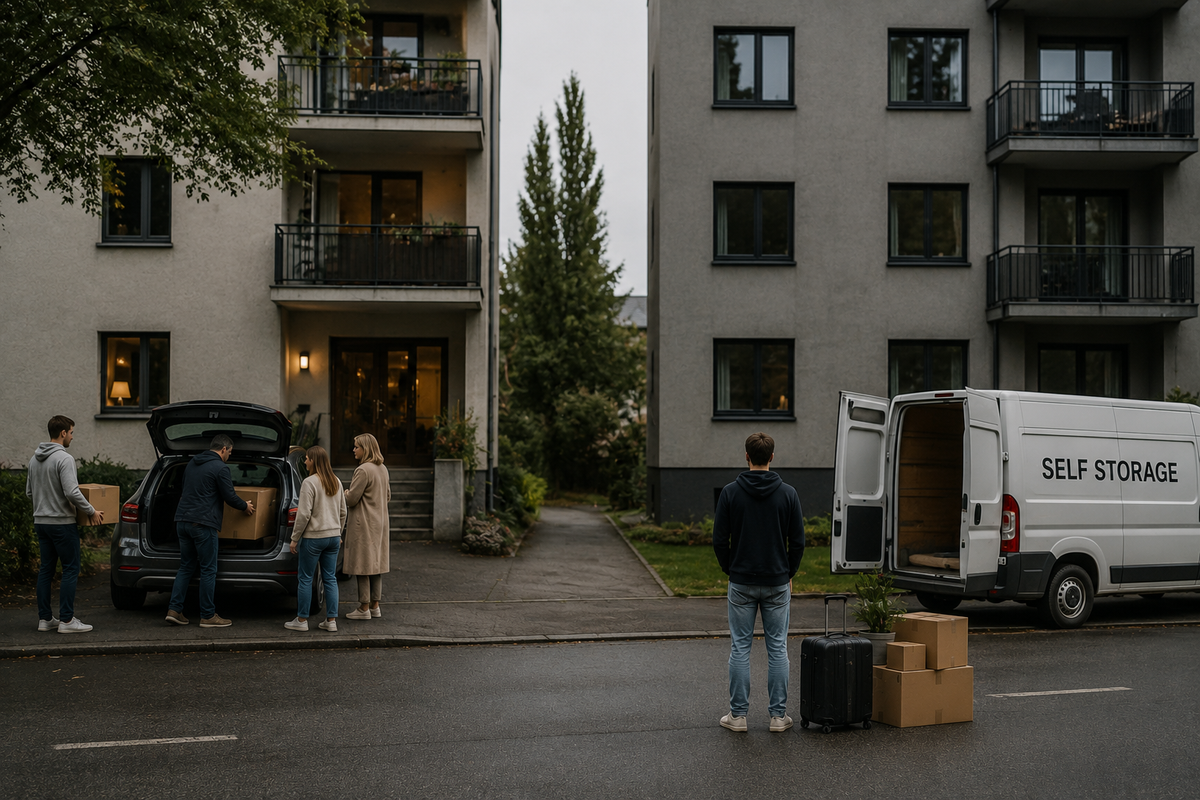
Those Who Have a Safety Net — and Those Who Don't
Some people can move back in with their parents. Others have to rent a storage unit and hope for the best.
By Jonas Steinarsen
I am beginning to think that the greatest divide in Norwegian society today has little to do with income.
It has to do with who you can call.
We spend a great deal of time discussing economic inequality—wages, interest rates, housing prices and inflation. All of these matter. Yet the older I get, the more I notice another kind of inequality.
Some people have a safety net.
Others don't.
And the difference between the two is enormous.
Two People Can Earn the Same Salary and Live Completely Different Lives
Imagine two twenty-five-year-olds.
Both have jobs.
Both rent their homes.
Both earn roughly the same salary.
On paper, they appear almost identical.
Then something happens.
The lease is terminated.
A temporary contract expires.
A relationship ends.
The washing machine breaks.
Suddenly, the differences become visible.
One of them moves back in with their parents for a few months. Borrows the family car. Stores their belongings in the garage. Eats dinner with the family. Receives a little financial help. Maybe even an interest-free loan.
The other has none of those options.
They have to find somewhere else to live immediately.
Rent a storage unit.
Pay for transport.
Solve every problem alone.
Perhaps rely on credit.
Perhaps sell possessions.
Perhaps live in a constant state of uncertainty.
On paper, they began with the same opportunities.
In reality, they were living in two completely different worlds.
We tend to think of capital as money.
But there are other forms of wealth.
A father who helps you move.
A mother who looks after the children.
A sister who lends you her car.
A friend who happens to be an electrician.
Someone with a trailer.
An aunt with a spare bedroom.
These are assets too.
Perhaps some of the most valuable assets a person can possess—not because they can be bought or sold, but because they reduce the risks of everyday life.
They allow a problem to remain a problem instead of becoming a crisis.
Norwegians like to think of themselves as independent.
Self-sufficient.
Equal.
Yet many young adults receive significant help from their families.
Some receive an advance on their inheritance.
Some get help with a mortgage deposit.
Some borrow a car.
Some store their belongings at home.
Some receive help with repairs.
Some simply have somewhere to stay when life suddenly falls apart.
There is nothing wrong with any of this.
On the contrary.
Families have always helped one another.
The problem begins when we pretend this support does not exist.
Because then we start comparing people as though they had begun from the same starting line.
They haven't.
The Invisible Safety Net
The new class divide is often difficult to see.
It's easy to notice who drives an expensive car.
Much harder to notice who has parents with a spare room available for six months.
It's easy to see the salary attached to a job advertisement.
Much harder to see who could receive an interest-free loan from their family tomorrow.
It's easy to see who owns a home.
Much harder to see who received help with the deposit, the down payment or the renovation.
Much of today's inequality is invisible.
It exists inside our relationships.
Our networks.
The people surrounding us.
The quiet safety nets we rarely talk about.
As long as life runs smoothly, those differences remain largely hidden.
Everyone goes to work.
Everyone pays the rent.
Everyone posts holiday photographs.
But when something goes wrong, inequality suddenly becomes visible.
You discover who has somewhere to go.
Who has someone to call.
Who can afford to make a mistake.
Because perhaps that is the greatest difference of all.
Some people can afford to stumble.
Others cannot.
Some make one bad decision and someone catches them before they hit the ground.
Others fall all the way.
When Simply Existing Becomes a Full-Time Job
I suspect many young adults live with a quiet sense of uncertainty.
Not necessarily because life is bad.
But because they know there is no reserve.
No buffer.
No Plan B.
If something happens, they will have to solve it themselves.
Alone.
That is a heavy realisation to carry.
Perhaps that is why so many of us seem more exhausted than previous generations.
Not because we are weaker.
But because many of us live with the constant awareness that we cannot afford for things to go wrong.
Sometimes modern adulthood feels as though it has been built upon a series of invisible assumptions.
That you have people around you.
That you have money set aside.
That you understand the system.
That you know who to call.
That you have the emotional energy to keep everything together.
Yet more and more people lack one or more of these things.
Even so, they are expected to function effortlessly.
To manage finances, housing, healthcare, digital systems and everyday logistics as though it were the most natural thing in the world.
Perhaps that is why so many of us are tired.
Not because we are lazy.
Not because we are weak.
But because simply existing in modern society requires more planning, more passwords, more apps, more coordination and an ever-growing reserve of mental energy.
And for those without a safety net, even an ordinary life can begin to feel like a full-time job.